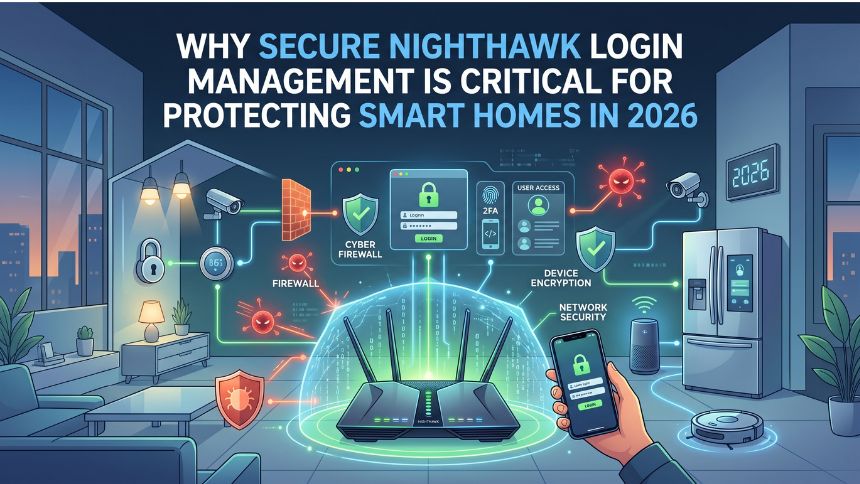
Smart homes have become more advanced than ever in 2026. From smart security cameras and voice assistants to connected appliances and intelligent lighting systems, modern households rely heavily on internet-connected devices. While these technologies offer convenience and automation, they also create new cybersecurity challenges. As the number of connected devices continues to grow, securing your home network has become a necessity rather than an option. One of the most important aspects of network security is protecting access to your router’s administrative settings. Proper Nighthawk Router Login management helps prevent unauthorized access, protects sensitive data, and ensures that your smart home ecosystem remains secure. Whether users access their router through 192.168.1.1 or a dedicated management application, securing login credentials is essential for maintaining network integrity.
The Router Is the Gateway to Your Smart Home
Every device connected to your home network communicates through the router.
This includes:
- Smart TVs
- Security cameras
- Smartphones
- Smart locks
- Voice assistants
- Gaming consoles
- Smart thermostats
Because the router serves as the central hub, gaining access to its administrative controls can provide attackers with extensive control over connected devices.
This makes router security a critical component of smart home protection.
Why Router Login Security Matters
Many homeowners focus on securing individual devices while overlooking the router itself.
An unsecured Nighthawk Router Login can allow unauthorized users to:
- Change network settings
- Monitor traffic
- Disconnect devices
- Redirect internet activity
- Install malicious configurations
Protecting administrative access significantly reduces these risks.
Cyber Threats Continue to Evolve
The cybersecurity landscape continues changing rapidly.
Modern threats include:
- Credential theft
- Network intrusion
- Malware attacks
- Ransomware attempts
- IoT exploitation
As smart homes become more connected, attackers increasingly target home networking equipment.
Strong login security provides a critical first line of defense.
Change Default Login Credentials Immediately
One of the most common security mistakes is leaving default administrator credentials unchanged.
Default usernames and passwords are often widely known.
After accessing the router through 192.168.1.1, users should immediately:
- Create a strong administrator password
- Avoid predictable phrases
- Use a unique combination of characters
Strong credentials dramatically improve network security.
Use Complex Passwords
A secure password should include:
- Uppercase letters
- Lowercase letters
- Numbers
- Special characters
Avoid using:
- Birthdates
- Names
- Common words
- Simple sequences
Complex passwords make unauthorized access significantly more difficult.
Enable Multi-Factor Authentication When Available
Multi-factor authentication adds an additional layer of protection.
Even if login credentials are compromised, MFA requires a secondary verification step before access is granted.
Benefits include:
- Improved account protection
- Reduced risk of unauthorized access
- Enhanced overall security
Whenever supported, MFA should be enabled.
Monitor Router Access Regularly
Routine monitoring helps identify unusual activity.
Users should periodically review:
- Login history
- Connected devices
- Security alerts
- Administrative changes
Unexpected activity may indicate attempted or successful unauthorized access.
Update Router Firmware Frequently
Firmware updates often include:
- Security patches
- Vulnerability fixes
- Stability improvements
- Performance enhancements
Outdated firmware may expose the network to known security risks.
Checking for updates regularly helps maintain a secure environment.
Protect Access to 192.168.1.1
Many users access their router through 192.168.1.1, making it one of the most important entry points into the network.
To improve security:
- Restrict administrative access
- Disable remote management when unnecessary
- Use strong credentials
- Log out after making changes
These precautions help reduce exposure to potential threats.
Secure Connected Smart Devices
Router security and device security work together.
Connected devices should also be protected by:
- Strong passwords
- Firmware updates
- Device-specific security settings
Weak IoT device security can undermine even a well-protected router.
Disable Unnecessary Features
Many routers include optional services that may not be required.
Examples include:
- Remote administration
- Legacy protocols
- Unused wireless networks
Disabling unnecessary features reduces the network’s attack surface.
Create a Separate Guest Network
Guest networks provide additional protection by isolating visitor devices from the primary network.
Benefits include:
- Enhanced privacy
- Reduced risk of device exposure
- Better network segmentation
Visitors gain internet access without interacting with critical smart home systems.
Watch for Unknown Devices
Unauthorized devices occasionally connect to unsecured networks.
Review connected device lists regularly and investigate:
- Unrecognized names
- Unexpected activity
- Unknown hardware addresses
Removing unauthorized devices improves both security and performance.
Secure Remote Access Carefully
Remote router management can be convenient, but it also increases risk.
If remote access is necessary:
- Use strong authentication
- Limit access permissions
- Enable encryption
- Monitor login activity
Otherwise, disabling remote management is generally recommended.
Smart Home Security Depends on Network Security
Many smart home devices control important household functions.
Examples include:
- Security cameras
- Door locks
- Alarm systems
- Environmental controls
A compromised network could potentially affect these systems.
This makes secure Nighthawk Router Login management more important than ever.
Benefits of Proper Router Security
Strong login security provides several advantages:
- Better privacy
- Reduced cyber risks
- Improved network reliability
- Enhanced device protection
- Greater peace of mind
These benefits extend throughout the entire smart home ecosystem.
Future Smart Home Security Trends
Emerging technologies are expected to improve home network protection through:
- AI-driven threat detection
- Behavioral monitoring
- Automated security responses
- Enhanced encryption standards
- Smart device authentication
These advancements will further strengthen smart home defenses.
Common Security Mistakes to Avoid
Homeowners should avoid:
- Using default passwords
- Ignoring firmware updates
- Sharing administrator credentials
- Leaving remote access enabled unnecessarily
- Failing to monitor connected devices
Avoiding these mistakes greatly improves security.
Final Thoughts
As smart homes become increasingly connected in 2026, protecting the network that supports them is essential. The router remains the central gateway through which every connected device communicates, making secure Nighthawk Router Login management a critical cybersecurity priority.
By securing access through .192.168.1, using strong passwords, enabling advanced security features, updating firmware reg1ularly, and monitoring network activity, homeowners can significantly reduce cyber risks and protect their connected environments. A secure router not only safeguards personal data but also ensures that every smart device within the home operates safely and reliably.