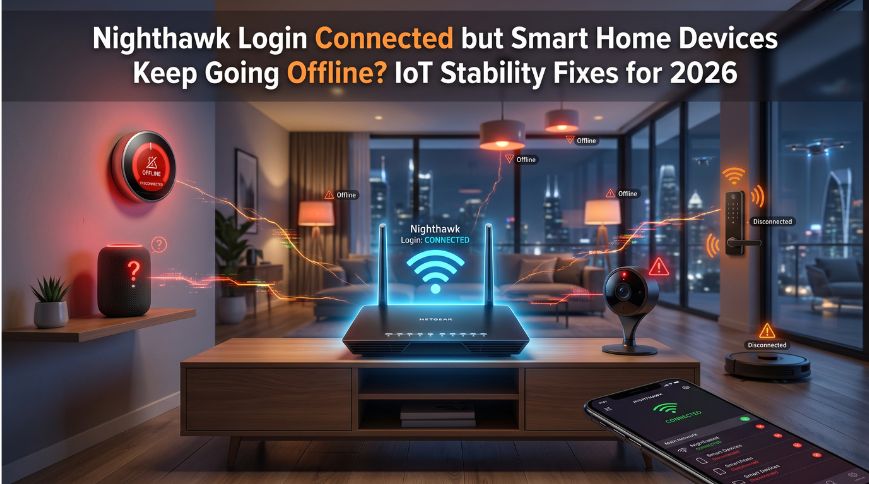
Smart homes in 2026 rely heavily on stable WiFi networks to power devices such as smart cameras, thermostats, doorbells, lighting systems, voice assistants, and home automation hubs. However, many users experience a frustrating issue where their Nighthawk router appears fully connected and operational, but smart home devices constantly disconnect from the network.
Users often notice:
- Smart cameras going offline
- Voice assistants losing connection
- Smart bulbs becoming unresponsive
- Delayed automation routines
- Doorbell notifications failing
- IoT devices reconnecting repeatedly
In many cases, the issue is not internet speed itself but network instability, poor device management, roaming conflicts, outdated firmware, or incorrect router optimization settings.
Fortunately, most of these problems can be solved through proper nighthawk setup optimization and advanced troubleshooting using 192.168.1.1.
This guide explains why smart home devices disconnect from Nighthawk routers and the best IoT stability fixes for 2026.
Why Smart Home Devices Disconnect More Easily
Unlike laptops or smartphones, IoT devices use:
- Low-power WiFi chips
- Smaller antennas
- Continuous cloud communication
- Background syncing
Smart home devices stay connected 24/7 and are highly sensitive to:
- Weak signals
- Roaming instability
- IP conflicts
- Congestion
- Firmware issues
Even small network interruptions can disconnect IoT devices temporarily.
Common Signs of IoT Stability Problems
Users frequently experience:
- Devices randomly showing offline
- Smart home delays
- Cameras buffering constantly
- Voice assistants disconnecting
- Failed automation triggers
- Devices reconnecting repeatedly
These symptoms usually indicate wireless stability problems rather than complete internet failure.
Why This Problem Is More Common in 2026
Modern homes now contain:
- WiFi 7 devices
- AI assistants
- Smart appliances
- Security systems
- Streaming devices
- Cloud-based automation systems
Many homes now support 40-100 connected devices simultaneously, placing much greater stress on routers than older home networks.
Fix #1: Optimize Nighthawk Setup Properly
A proper nighthawk setup is critical for IoT stability.
Important Settings to Review
- WiFi band configuration
- DHCP settings
- Firmware updates
- Device prioritization
- Security protocols
Incorrect setup configurations often create unnecessary smart device disconnects.
Fix #2: Access Router Settings Through 192.168.1.1
Open:
- 192.168.1.1
Inside the dashboard:
- Check connected devices
- Monitor signal quality
- Review IP assignments
- Optimize wireless settings
- Detect overloaded connections
The admin panel helps identify many common IoT communication problems quickly.
Fix #3: Separate 2.4GHz and 5GHz Networks
Most smart home devices operate best on:
- 2.4GHz WiFi
However, combined smart-band systems may confuse older IoT devices.
Best Solution
Create separate network names for:
- 2.4GHz devices
- 5GHz devices
This improves smart home device stability significantly.
Fix #4: Assign Static IP Addresses
Dynamic IP changes can cause:
- Smart device disconnects
- Cloud communication failures
- Reconnection loops
Benefits of Static IP Assignments
- More stable device communication
- Reduced reconnect problems
- Better automation reliability
Configure device reservations through:
- 192.168.1.1
for improved IoT stability.
Fix #5: Update Router Firmware
Outdated firmware is one of the biggest causes of:
- Device disconnects
- Smart home instability
- WiFi conflicts
- Compatibility problems
Firmware updates improve:
- IoT communication
- Security
- Traffic handling
- Network stability
Always keep your router fully updated.
Fix #6: Reduce Network Congestion
Heavy network activity affects smart home devices quickly.
Common Congestion Sources
- 8K streaming
- Cloud backups
- Gaming downloads
- Video conferencing
- Large file transfers
Reducing unnecessary traffic improves IoT reliability dramatically.
Fix #7: Disable Aggressive Smart Roaming Features
Modern routers sometimes move devices aggressively between:
- WiFi bands
- Mesh nodes
- Signal sources
Many IoT devices struggle with advanced roaming systems.
Symptoms Include:
- Random offline alerts
- Frequent reconnects
- Delayed responses
Disabling certain roaming features may improve stability.
Fix #8: Improve Router Placement
Router location greatly affects smart home reliability.
Best Placement Tips
Position the router:
- Centrally in the home
- Elevated off the floor
- Away from walls
- In open spaces
Avoid Placement Near:
- Microwaves
- Metal cabinets
- TVs
- Large appliances
Strong signal consistency is critical for IoT devices.
Fix #9: Restart the Entire Network Monthly
Temporary memory conflicts build over time.
Recommended Restart Order
- Restart modem
- Restart router
- Reconnect smart devices
Routine reboots refresh:
- DHCP assignments
- Device tables
- Wireless communication
Monthly maintenance improves long-term stability.
Fix #10: Limit Total Connected Devices
Many routers struggle when supporting too many active devices simultaneously.
Signs of Overload
- Devices disconnecting randomly
- Delayed smart home actions
- Slower response times
- Weak network performance
Reducing unnecessary connections often restores stability immediately.
Why IoT Devices Need Stability More Than Speed
Smart devices prioritize:
- Constant connectivity
- Cloud communication
- Fast response times
Even brief interruptions can:
- Trigger offline alerts
- Break automation routines
- Interrupt camera recording
- Delay notifications
Signal consistency matters more than raw speed.
Why WiFi 7 Creates New Challenges
WiFi 7 introduces:
- Faster roaming
- Multi-Link Operation (MLO)
- Advanced traffic balancing
- Dynamic spectrum optimization
Older IoT devices may struggle with these newer networking behaviors.
Proper optimization helps bridge compatibility gaps.
Importance of 192.168.1.1 in 2026
The 192.168.1.1 admin dashboard now plays a major role in:
- Device monitoring
- Network optimization
- DHCP management
- IoT troubleshooting
- Traffic balancing
Regular dashboard monitoring helps prevent smart home instability before it becomes severe.
Why AI Networking Is Becoming Important
Modern Nighthawk routers increasingly use AI-powered optimization tools to:
- Detect congestion automatically
- Balance traffic intelligently
- Prioritize smart devices
- Reduce signal conflicts
AI networking improves smart home reliability significantly.
Common User Mistakes
Avoid these common setup problems:
- Combining all bands into one SSID
- Ignoring firmware updates
- Overloading the network
- Using weak passwords
- Placing routers poorly
- Keeping outdated IoT devices online
Small setup changes often create major improvements.
When to Upgrade Your Router
Consider upgrading if:
- Smart devices disconnect daily
- Firmware support has ended
- Router overheats frequently
- IoT instability continues constantly
- Device count exceeds router capacity
Modern WiFi 6E and WiFi 7 routers handle smart homes much more efficiently.
Future of Smart Home Networking
Experts expect future routers to include:
- AI device prioritization
- Predictive traffic balancing
- Automated troubleshooting
- Self-healing mesh systems
- Advanced IoT isolation features
Home networking will continue becoming more intelligent and automated.
Final Thoughts
If your Nighthawk router appears connected but smart home devices continue going offline, the issue is usually related to network congestion, roaming conflicts, weak signal placement, outdated firmware, or improper IoT optimization settings.
By improving your nighthawk setup, optimizing settings through 192.168.1.1, separating WiFi bands, assigning static IP addresses, and reducing congestion, users can dramatically improve smart home stability throughout 2026.
With proper optimization and routine maintenance, Nighthawk routers can deliver reliable whole-home connectivity for modern smart homes, IoT systems, security devices, and WiFi 7 networks.