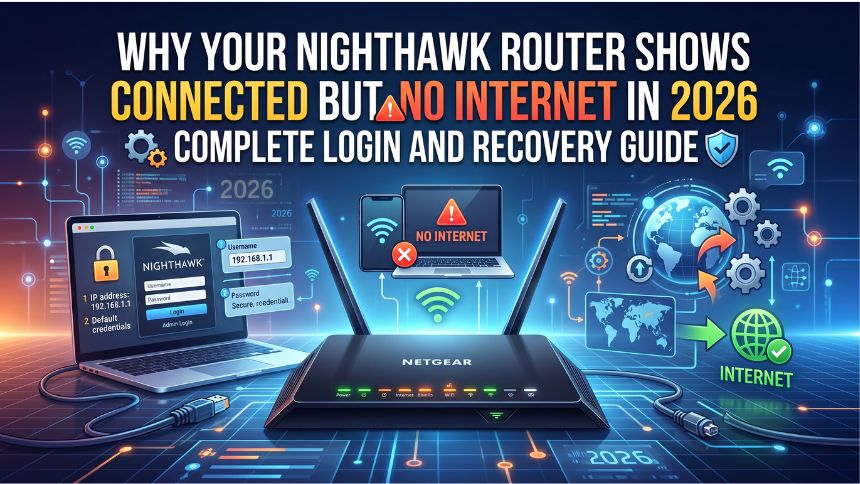
One of the most frustrating networking issues homeowners encounter is seeing a WiFi connection that appears strong while internet access remains unavailable. In 2026, with smart homes, remote work, cloud gaming, and 8K streaming becoming everyday activities, a “Connected, No Internet” error on a Nighthawk router can disrupt productivity and entertainment alike.
Fortunately, this issue is usually caused by configuration errors, ISP interruptions, firmware problems, or network conflicts rather than hardware failure. By accessing your router through 192.168.1.1 and using the netgear nighthawk app, you can diagnose and resolve most connectivity issues quickly without replacing your equipment.
This guide explains the most common causes and the best recovery methods to restore your Nighthawk router’s internet connection.
What Does “Connected but No Internet” Mean?
When your device displays “Connected, No Internet,” it means:
- Your device is successfully connected to the router.
- The router is broadcasting WiFi normally.
- The router cannot reach your Internet Service Provider (ISP).
In most cases, the WiFi itself is functioning correctly, but the internet connection between the router and modem has been interrupted.
Common Causes of the Problem
Several factors can trigger this issue, including:
- ISP outages
- Loose Ethernet cables
- Corrupted router settings
- Firmware bugs
- Incorrect DNS settings
- IP address conflicts
- Modem synchronization issues
Identifying the root cause is the first step toward restoring connectivity.
Restart Your Network Equipment
A complete power cycle often resolves temporary communication issues.
Follow these steps:
- Turn off the modem.
- Turn off the Nighthawk router.
- Wait about one minute.
- Restart the modem first.
- Wait until all modem status lights stabilize.
- Turn the router back on.
This process refreshes the network connection and clears temporary errors.
Check the Internet Service
Before troubleshooting the router, verify that your ISP connection is active.
You can:
- Check for outage notifications.
- Connect a computer directly to the modem.
- Contact your ISP if no internet is available.
If the modem cannot access the internet, the issue likely originates with your service provider.
Access Router Settings Through 192.168.1.1
Logging into the router via 192.168.1.1 allows you to review important network settings. From the administrator dashboard you can:
- Verify Internet status
- Review WAN settings
- Restart the router
- Check firmware versions
- View error logs
These tools help identify configuration problems quickly.
Use the Netgear Nighthawk App
The netgear nighthawk app provides convenient troubleshooting features directly from your smartphone.
Using the app, you can:
- Check internet connectivity
- Restart the router remotely
- Run speed tests
- View connected devices
- Receive network alerts
- Update firmware
The app simplifies diagnosing many common networking issues.
Inspect Physical Connections
Loose or damaged cables often cause internet failures.
Check:
- Ethernet cable between modem and router
- Power adapters
- LAN connections
- Modem status lights
Replacing worn Ethernet cables may restore connectivity immediately.
Update Router Firmware
Firmware updates improve:
- Stability
- Security
- Device compatibility
- Performance
Outdated firmware may introduce connectivity problems or software bugs. After logging into 192.168.1.1, check whether a newer firmware version is available.
Alternatively, the netgear nighthawk app can notify you when updates are released.
Verify WAN Configuration
Improper WAN settings may prevent the router from connecting to the internet.
Review:
- Dynamic IP configuration
- PPPoE credentials (if required)
- Static IP settings
- Gateway information
Incorrect values can block internet access even though WiFi remains active.
Check DNS Settings
Faulty DNS servers may prevent websites from loading. If DNS resolution fails, devices appear connected but cannot reach online services.
Switching to reliable public DNS servers can often improve connectivity and browsing performance.
Review IP Address Assignments
Network conflicts sometimes occur when multiple devices receive duplicate IP addresses.
Verify that:
- DHCP is enabled.
- IP ranges are configured correctly.
- Connected devices receive valid addresses.
Resolving IP conflicts often restores stable communication.
Disable VPNs and Security Software Temporarily
Some VPN applications or firewall software may interfere with internet access. Temporarily disabling them helps determine whether they are causing the issue. If connectivity returns, review their configuration before re-enabling protection.
Reduce Network Congestion
Modern households often connect dozens of devices simultaneously.
Heavy usage from:
- Video streaming
- Cloud backups
- Online gaming
- Smart home devices
can overload older networking equipment.
Disconnect unnecessary devices during troubleshooting to determine whether congestion is affecting performance.
Reset Network Settings
If configuration issues persist, resetting network settings may help.
This process clears:
- Cached IP addresses
- Temporary networking errors
- DNS cache
- Connection profiles
Often, devices reconnect successfully after refreshing their network configuration.
Perform a Factory Reset Only as a Last Resort
If all troubleshooting steps fail, a factory reset may restore proper operation.
Remember that resetting the router removes:
- WiFi names
- Passwords
- Custom settings
- Port forwarding rules
- Security configurations
Always back up important settings before performing a reset.
Prevent Future Connectivity Problems
To maintain reliable internet performance:
- Keep firmware updated.
- Restart networking equipment periodically.
- Replace damaged cables promptly.
- Use quality surge protection.
- Monitor router performance regularly.
- Secure administrator credentials.
Routine maintenance helps prevent many future connectivity issues.
Signs the Problem Has Been Resolved
Once recovery is complete, you should notice:
- Stable internet access
- Fast webpage loading
- Reliable video streaming
- Smooth online gaming
- Consistent smart home performance
Monitoring the network for several hours helps confirm long-term stability.
Final Thoughts
A Nighthawk router displaying “Connected but No Internet” does not necessarily indicate a hardware failure. In most cases, the issue stems from ISP outages, configuration errors, firmware problems, or temporary network interruptions that can be resolved with systematic troubleshooting.
By accessing the router through 192.168.1.1, using the netgear nighthawk app to monitor network health, updating firmware, checking WAN settings, and verifying physical connections, users can restore internet access quickly and keep their home network running smoothly. With regular maintenance and proper configuration, your Nighthawk router can continue delivering reliable performance throughout 2026 and beyond.